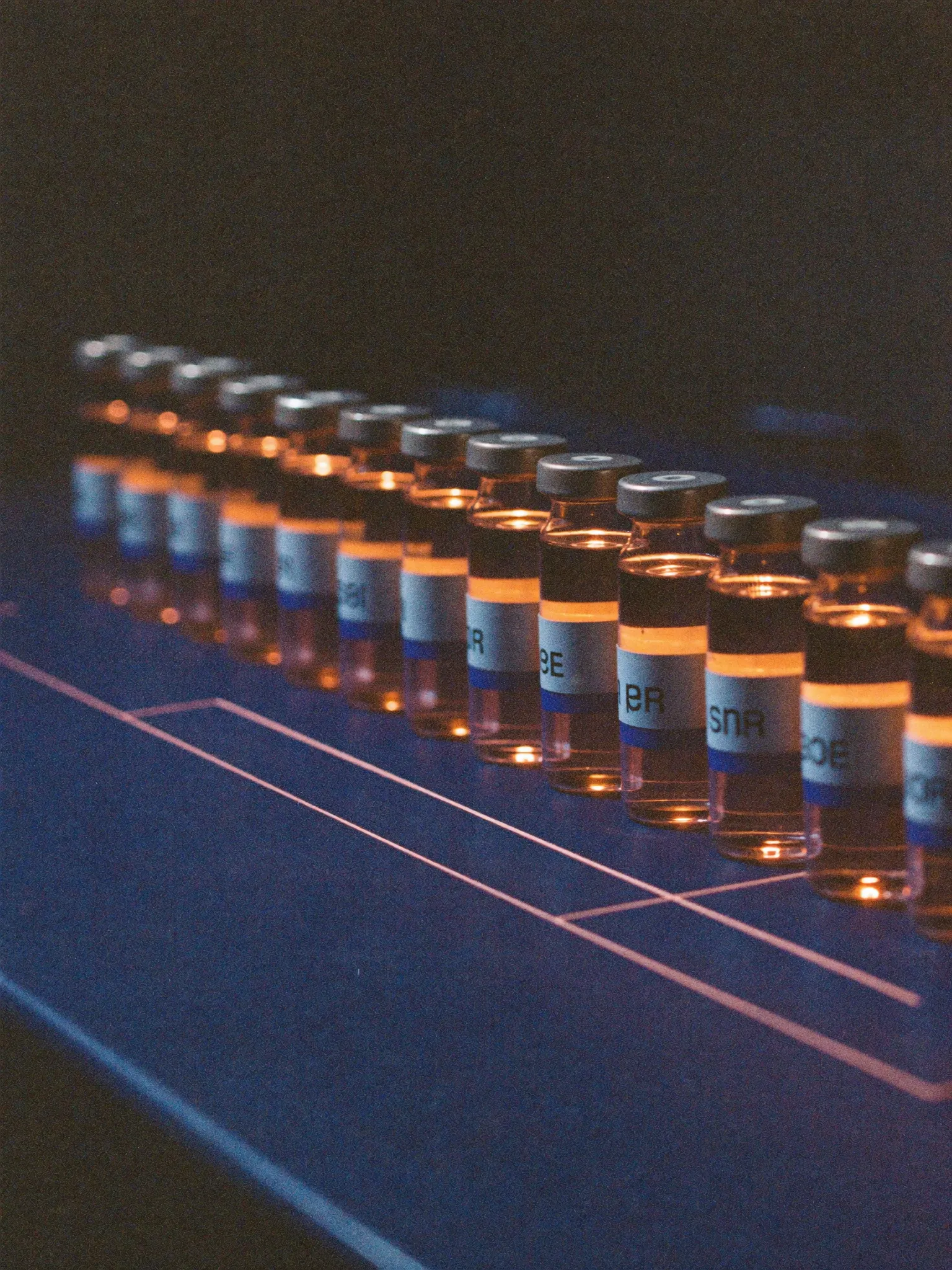
A single biomarker is a snapshot of one organ on one morning. A panel is a systems picture. The LUMA baseline is designed around a rule: we only measure what can change a decision.
The five systems
- Metabolic: fasting glucose and insulin, HbA1c, HOMA-IR, uric acid, liver enzymes — insulin resistance is the quiet engine behind most chronic disease.
- Cardiovascular: ApoB, Lp(a), triglycerides, hs-CRP, blood pressure — the particle count and the inflammation that makes particles stick.
- Hormonal: thyroid panel, sex hormones, DHEA-S, cortisol rhythm — energy, mood, recovery, and body composition all route through here.
- Inflammatory & immune: hs-CRP, homocysteine, ferritin — slow-burn inflammation accelerates everything else.
- Organ function & nutrients: kidney (eGFR, cystatin C), complete blood count, vitamin D, B12, iron studies, omega-3 index.
Plus the numbers a blood draw can’t give you
Bloodwork is half the picture. The other half is functional: VO₂ max estimate, grip strength, body composition, resting heart rate and HRV, sleep duration and regularity. These predict outcomes as strongly as anything in the tube — and they respond to training within weeks, which makes them the most motivating numbers on the report.
More data is not the goal — fewer, better decisions is. Your clinician’s job is to compress two hundred markers into the two or three that deserve your next ninety days.
The cadence
Baseline, then re-test the flagged systems at three to six months, then annually once stable. Trends beat snapshots: the second panel is where the plan gets sharp, because now every number has a direction.
Panel design is illustrative of longevity-medicine practice patterns. Concept brand — not medical advice.